
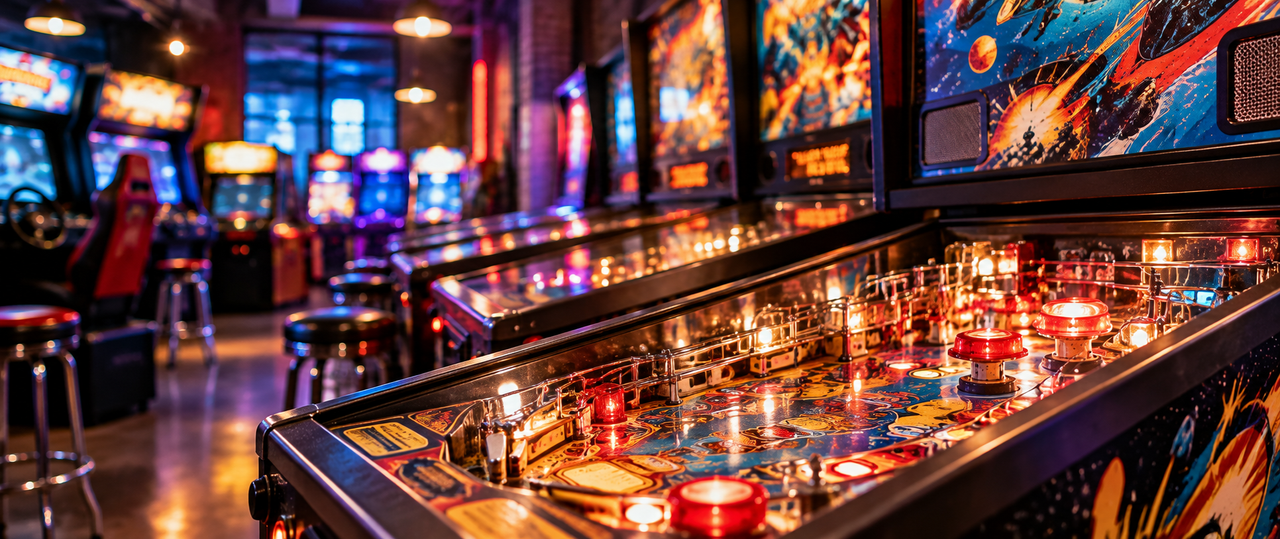
Walk onto the floor of any thriving barcade, bowling alley, or corporate breakroom in 2026, and you'll notice something: the machines pulling the biggest crowds aren't screens. They're pinball machines, flashing, clattering, unmistakably physical, and they're earning their keep. For operators trying to figure out where to put their next equipment dollar, that's not nostalgia talking. It's math.
At Game Exchange of Colorado, we've spent decades helping venue owners, home collectors, and corporate buyers separate genuine revenue drivers from passing trends. Our 12,000+ sq. ft. showroom in Denver is stocked with the titles operators actually ask for, backed by manufacturer partners like Stern Pinball, Jersey Jack Pinball, and Chicago Gaming.
If you've been wondering whether pinball still pulls its weight against digital-first entertainment, here's the honest answer.
The Quiet Rebellion Against Screens: Why Physical Play Is Booming Again
Pinball didn't just survive the console era, it's outgrowing it. The global pinball machines market is valued at roughly $0.4B in 2025 and is projected to reach $0.58B by 2034, expanding at a 4.5% CAGR, according to Market Intelo. This is driven by nostalgia-fueled demand, licensed franchise machines, and commercial venue expansion.
That growth is also being pulled forward by three things happening at once:
1. A generation of millennial and Gen X buyers with real disposable income and genuine nostalgia for physical arcade play
2. A wave of licensed intellectual property, Marvel, Godzilla, Avatar, pulling in casual players who'd never call themselves "pinball people"
3. A commercial venue boom, as bars, breweries, and entertainment centers look for attractions that can't be replicated on a phone screen.
Two Numbers Every Operator Should Actually Care About
These two figures are the ones worth remembering. Commercial operators usually recover their pinball machine investment within 18 to 36 months, with high-performing licensed machines in premium venues generating $300 to $800 in monthly revenue, while mid-tier locations average $150 to $300, according to the same report by Market Intelo.
For a piece of equipment that also holds its resale value better than most amusement hardware, that's a payback window most venue owners would take on any category of equipment.
Put simply: pinball isn't a discretionary “nice to have” on a game floor. It's a line item that pays for itself, then keeps paying.
What Makes a Ball Bounce Back for More
Digital games ask players to watch. Pinball asks them to do something, track a physical ball, time a flipper, read a playfield that never behaves exactly the same way twice. That unpredictability is the whole engine of repeat play, and it's the reason a well-placed pinball row keeps generating “one more game” long after a video cabinet has lost a player's attention.
Licensed titles amplify that pull even further. A Stern pinball machine built around a recognizable franchise, think Godzilla pinball or Marvel Uncanny X-Men pinball, doesn't just attract pinball enthusiasts. It attracts fans of the IP who'll stop, watch, and eventually drop a coin simply because they recognize the name on the backglass. That's a customer acquisition cost of basically zero, and it's one of the clearest reasons licensed pinball consistently outperforms unlicensed titles on any given floor.
From Flippers to Floor Profits: What Keeps Pinball Running Strong
New-in-box machines from established manufacturers are built differently than the vintage units still floating around secondhand listings. Modern solid-state pinball machines use LED lighting and modular circuit boards instead of the heat-prone incandescent bulbs and aging solenoids found in older electromechanical designs, which means less manual tuning and fewer surprise breakdowns during a busy weekend.
A few other things worth dialing in once a machine is on your floor:
1. Adjustable outlane widths and ball-save timers let you control average play time per credit
2. Tighter play time keeps games turning over during peak hours instead of one player camping a machine
3. Diagnostic features on newer cabinets flag issues early, cutting down on unplanned downtime
4. Regular cleaning and playfield waxing extend both gameplay quality and machine lifespan
And unlike most amusement equipment, pinball doesn't lose its shirt on resale. Popular titles hold their value close to what a collectible would, and limited editions can climb over time, which makes the initial purchase feel far less like a depreciating expense and more like a floor asset that happens to also generate cash while you own it.
The Machines That Earn Their Place on the Floor
Not every title fits every space. Here's how the current top performers break down by use case, all available through our showroom.
1. Stern Pinball - Godzilla: A kaiju-themed multi-ball machine with a crumbling-skyscraper ball lock, available in Pro, Premium, and Limited Edition builds. The Pro model is built for high-frequency commercial play; the LE is a centerpiece for private collectors.
2. Stern Pinball - Uncanny X-Men: Interactive Marvel mech elements and cinema-grade lighting give this one exceptional across-the-room visual pull, which is exactly what drives walk-up play in street locations.
3. Jersey Jack Pinball - Avatar: High-speed kinetic play with a full-color LCD backbox, ideal for venues chasing a younger, visually driven crowd alongside traditional pinball fans. Browse the full Jersey Jack pinball lineup for LE and Collector's Edition options.
4. Chicago Gaming - Pulp Fiction: Proof that refined retro design and a timeless theme can outperform flashier new releases, particularly with multi-generational crowds. See Chicago Gaming pinball.
Each of these earns its floor space differently, some on nostalgia, some on IP pull, some on pure mechanical spectacle, which is exactly why a mixed lineup tends to outperform a single-title floor.
Round Out the Room: What Pairs Well with Pinball
Pairing a licensed pinball machine with complementary attractions extends dwell time even further and keeps players moving through your floor instead of leaving after one game.
Beyond the Flippers: Building a Floor That Keeps Players Moving
A single pinball machine earns its keep, but a well-paired floor earns even more. The right lineup around it stretches dwell time, spreads spending across multiple attractions, and gives every type of player a reason to stick around.
1. Video Arcade Games: Classic and modern cabinets widen your audience beyond pinball purists. They give younger players and casual walk-ins an easy entry point into your game room.
2. Redemption Games: Ticket-and-prize machines turn a single play session into a small event. Kids and families especially gravitate toward the payoff of walking away with something tangible.
3. Dart Boards: A low-footprint addition that adds social, competitive energy without eating up floor space. Great for bars and breweries where players want something to do between rounds.
4. Foosball Tables: Head-to-head play draws groups and keeps them at your venue longer. It's a natural complement to pinball's one-player intensity, adding a social, team-based option.
5. Pop-A-Shot Basketball and Dome Hockey: Fast, competitive games that thrive in corporate breakrooms and team spaces. They're easy to pick up in short bursts, which makes them ideal for quick breaks.
6. Used Pinball Machines: A smart way to expand your lineup without stretching your equipment budget. Proven titles at a lower price point still deliver strong repeat play.
7. Multi-Game Arcade Cabinets: Pack dozens of titles into a single footprint, perfect for lobbies and waiting areas. They're an efficient way to add variety in spaces too tight for a full arcade lineup.
To Own or to Lease: Mapping the Right Path for Your Floor
There's no universal right answer for how to bring a pinball onto your floor. It depends on cash flow, how confident you are in a title's staying power, and whether you're outfitting one venue or several.
|
Consideration |
Outright Purchase |
Lease/Rental |
|
Best for |
Confident, long-term placements |
Testing a title or seasonal venues |
|
Upfront cost |
Higher |
Lower |
|
Resale control |
Full control over timing |
Not applicable |
|
Maintenance |
Owner's responsibility |
Often handled as part of agreement |
|
Ideal buyer |
Established venues, serious collectors |
Pop-ups, corporate breakrooms, first-time buyers |
Outright Purchase makes the most sense for operators confident in a title's long-term draw, especially given how well pinball retains resale value compared to other amusement equipment. Owning the machine outright also means full control over placement, difficulty tuning, and eventual resale timing.
Lease/Rental is the better fit for testing a new title before committing capital, for seasonal or pop-up venues, or for corporate buyers who want the breakroom morale boost of a pinball machine without the long-term maintenance responsibility. It's also a common entry point for home game room builders who want to try a title before deciding to buy.
Your Next Move: From Floor Plan to Payoff
The numbers make the case on their own: a payback window most operators would take on any equipment category, resale value that holds instead of depreciating, and a customer acquisition cost that drops to zero the moment a recognizable title catches someone's eye across the room.
The real story is what happens after the math checks out: a physical, unpredictable game that asks players to do something instead of just watch, which is why "one more game" keeps turning into steady, repeatable revenue.
Choosing the right title comes down to matching footprint, budget, and player demographics to your specific space, and that's the conversation our team has with operators, corporate buyers, and home collectors every day. Since 1980, Game Exchange of Colorado has helped build floors that perform, not just floors that look good.
Explore our full collection of pinball machines and arcade equipment online, stop by our showroom to see and play titles before you commit, or contact us directly to build a custom equipment list suited to your venue.
Frequently Asked Questions
1. How much revenue does a pinball machine generate per month?
Mid-tier venues see $150 to $300 monthly per machine, while premium licensed titles in high-traffic locations can generate $300 to $800. Revenue scales heavily with location quality and title popularity.
2. How long does it take to recover the cost of a pinball machine?
Most commercial operators recover their investment within 18 to 36 months, depending on venue traffic and how well the title's licensing resonates with their crowd.
3. Do pinball machines hold their value over time?
Popular and licensed titles retain strong resale value compared to most amusement equipment, and limited editions can even appreciate. That makes pinball one of the steadier equipment investments on a floor.
4. Should I lease or purchase a pinball machine for your venue?
Outright Purchase suits operators confident in a title's staying power and who want full resale control. Lease/Rental works better for testing a title, seasonal venues, or corporate spaces wanting flexibility without long-term commitment.
5. What makes licensed pinball machines outperform unlicensed titles?
Recognizable IP like Godzilla or Marvel draws in fans of the franchise, not just pinball enthusiasts, pulling in walk-up players who wouldn't otherwise stop at the machine. That translates directly into higher coin-drop and repeat play.