
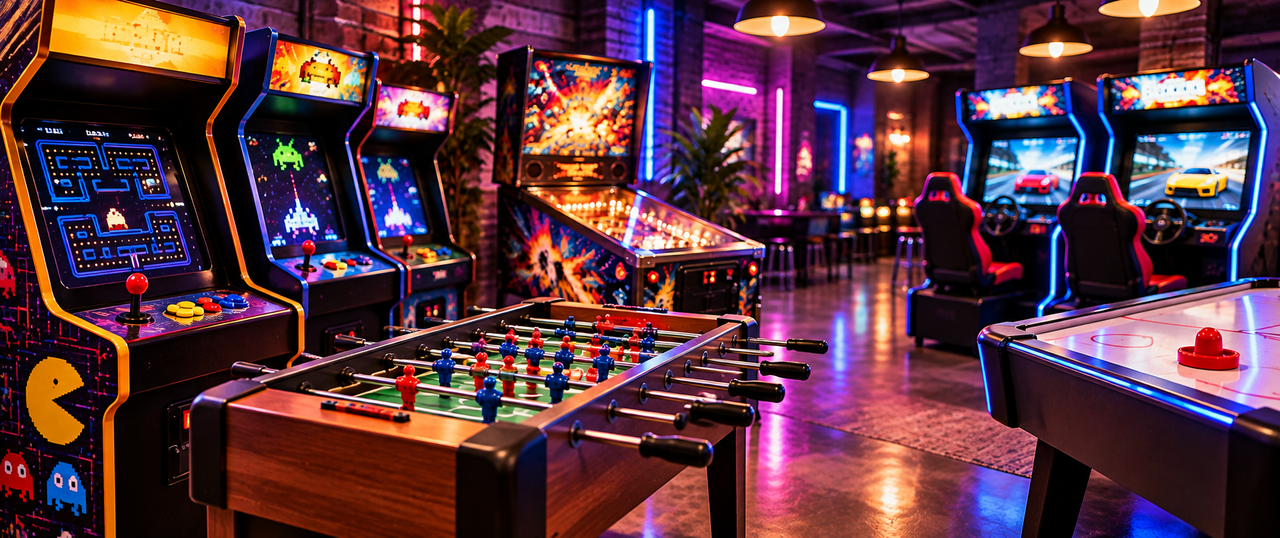
For years, the prevailing wisdom was that home consoles and smartphones had rendered the local arcade obsolete. Yet look around any packed neighborhood hangout, modern office lounge, or finished basement today, and you’ll see a very different story playing out. Retro arcade games aren't just surviving, they’re stealing the spotlight back from streaming queues and solo online lobbies.
Today's classic arcade games cover the full roster of tactile, stand-up fun: iconic 1980s upright cabinets, restored 1990s pinball tables, fast-paced air hockey and foosball, ticket redemption hits, and brand-new commercial arcade machines built with old-school soul.
This retro gaming comeback is about far more than chasing 1980s nostalgia. It’s driven by people craving real, shoulder-to-shoulder competition, next-generation upgrades under the hood of modern cabinets, and a surging demand for home arcade games and high-energy social venues.
The Arcade Never Really Disappeared
Instead of vanishing when home consoles gained popularity in the late 1990s, arcades simply expanded beyond traditional mall corridors into neighborhood gathering spots, workplaces, and family homes across the US.
Today, barcade equipment anchors craft breweries, redemption games energize bowling centers, and free-play cabinets keep families entertained in restaurant waiting areas and corporate break rooms.
According to IBISWorld, U.S. arcade, food, and entertainment complexes generated an estimated $6B in revenue in 2026, proving that out-of-home physical play remains a powerhouse industry. HTF Market Intelligence estimates the global retro gaming market reached $5.8B in 2025 and is projected to hit $9.8B by 2033 at a 7.8% CAGR.
Even better, retro machines act as a bridge between generations. Parents who spent their allowances mastering Pac-Man or Street Fighter are now introducing those exact cabinets to their kids, no confusing 16-button controllers, firmware updates, or microtransactions required.
Where to Start: 5 Strong Picks from Game Exchange of Colorado
A standout game room thrives on variety: mixing oversized retro icons, head-to-head racing, skill-based shooters, and multi-game classics to create shared, physical fun that consoles simply cannot match.
At Game Exchange of Colorado, you can test-play live machines in our 12,000-square-foot Denver showroom before making a single decision.
Ready to build a balanced floor? Here are 5 standout titles worth checking out:
|
Product |
Type |
Why It Fits the Retro-Arcade Comeback |
|
Retro multi-game cocktail cabinet |
A compact, social retro centerpiece featuring classic Namco arcade gameplay, vibrant graphics, and a cocktail-table format that fits seamlessly into game rooms, offices, and bars. |
|
|
Classic upright arcade |
A genuine golden-age arcade icon and one of the most recognizable cabinets for collectors and home game rooms, standing alongside Galaga as an essential 1980s classic. |
|
|
Golf arcade / sports simulator |
A modern take on a beloved bar-and-arcade classic, with a full-size control panel, real trackball, and compact GO format suitable for homes, offices, and venues. |
|
|
Racing simulator |
Brings physical, head-to-head arcade racing into the mix with force-feedback steering, crisp HD screens, and linked multiplayer competition that solo console setups cannot match. |
|
|
Light-gun shooter |
A proven social arcade staple with pump-action rifles, competitive play, and online leaderboards, especially effective in bars, lounges, and entertainment venues. |
Pro Tip for Rounding Out Your Room
Want to bring a non-screen physical element into the mix? Pairing your video lineup with table sports like Super Chexx Pro Dome Hockey or a Brunswick Premier Air Hockey Table gives groups an instant, head-to-head physical game option between video rounds.
Why Nostalgia Hits Different in an Arcade
Playing a classic title on a smartphone screen is fine for killing 5 minutes in line at the grocery store, but it cannot replicate the physical presence of a 300-pound upright cabinet.
Here’s why stepping up to a real machine creates an experience screens in your pocket never will:
-
Tactile, Full-Sensory Feedback: There’s a visceral magic to slapping a microswitch button, gripping a heavy joystick, and feeling subwoofer bass vibrate through the floorboards when you nail a high score.
-
Shared High-Score Culture: When 3 friends crowd around a cabinet cheering on a final lap or high-score run, that live energy creates lasting stories long after the game ends.
-
Functional Pop-Art Design: Bold side-art decals, glowing marquees, and illuminated playfields have earned serious design credibility, serving as eye-catching centerpieces in modern homes and upscale venues alike.
-
Lasting Collector Value: That cultural staying power fuels strong collector demand. Sought-after 1990s pinball titles and classic cabinets have historically held their value remarkably well, making them both playable.
|
Gaming Format |
Social Dynamic |
Sensory Experience |
Longevity and Value |
|
Mobile and Console Games |
Mostly solo or remote via headsets |
Flat glass screens and small thumbsticks |
Rapidly depreciates as new hardware drops |
|
Retro and Modern Arcades |
Side-by-side shoulder-to-shoulder play |
Tactile buttons, real steel balls, marquee glow |
Durable commercial build that retains long-term appeal |
Modern Technology is Making Retro Feel New
One of the biggest misconceptions about vintage arcade machines and modern releases is that they are fragile relics. In reality, today's manufacturers and restoration specialists blend classic gameplay mechanics with cutting-edge hardware that makes old formats feel fresh, fast, and reliable:
-
Next-Gen Audio, Visuals and Connectivity: Modern releases pack razor-sharp HD LCD displays, vibrant RGB LED lighting, concert-grade audio systems, and Wi-Fi-connected global leaderboards into classic cabinet silhouettes.
-
Hybrid Pinball Engineering: Builders like Stern Pinball and Jersey Jack Pinball pair traditional mechanical ramps, magnets, and steel balls with interactive backbox video screens and blockbuster licensed themes.
-
Immersive Arcade Simulators: Modern video cabinets from manufacturers like Raw Thrills deliver massive HD screens, pump-action light guns, and force-feedback steering wheels that living room setups simply cannot match.
-
Modernized Vintage Restorations: Even true 1980s and 1990s classics benefit from contemporary upgrades. When specialist technicians restore vintage cabinets, they replace brittle wiring, swap aging power supplies for dependable modern boards, and upgrade dim bulbs to cool-running LEDs.
That blend of nostalgic soul and modern reliability is a major reason the global arcade machines market was valued at $4.01B in 2025 and is projected to climb to $6.42B by 2034 at a 5.2% compound annual growth rate, according to DataIntelo.
Arcade Games are Built for Social Play
Online multiplayer lets you play with people, yet somehow you are still sitting alone in a dark room. Arcade hardware flips that dynamic on its head by forcing players into the same physical space.
Consider the sheer variety of social formats built into an arcade lineup:
-
Side-by-Side Racing: Two linked driving cabinets turn a quiet Tuesday night into a loud, trash-talking championship.
-
Head-to-Head Table Games: Air hockey, dome hockey, and foosball spark instant, zero-learning-curve rivalries for guests of every age.
-
Score-Chasing Pinball: Players take turns stepping up to the flippers, sharing tips and celebrating wizard modes together.
-
Redemption Games: Ticket and prize machines give kids and families a tangible reward they can hold in their hands.
For bar owners, bowling alleys, and family entertainment centers, this social magnetism translates directly into longer dwell times and repeat visits.
Successful commercial operators deliberately mix arcade games for sale, pinball machines for sale, and table sports so casual visitors, families, and hardcore score-chasers all find their sweet spot on the floor.
The Home Game Room is the New Arcade
With dining out and entertainment prices climbing, homeowners are investing heavily in bringing the night out home. Finished basements, converted garages, bonus rooms, and covered patios are rapidly transforming into custom private arcades.
If you are brainstorming arcade game room ideas, the trick is balancing layout with variety:
-
The Anchor Piece: Place an authentic upright classic like a restored Ms. Pac-Man or a flagship pinball machine at the focal point of the room.
-
The Party Starter: Line a main wall with high-energy multiplayer action, such as a linked Fast & Furious racing cabinet, a Big Buck Hunter Reloaded shooter, or a Golden Tee GO PGA Tour trackball setup, to spark instant group competition.
-
The Quick-Hit Corner: Tuck a compact Pac-Man Pixel Bash cocktail cabinet, dome hockey unit, or air hockey table near the bar or seating area for casual between-round play.
Before you buy an arcade machine, take a tape measure to your space. Check basement stair turns, doorway widths, and ceiling heights, especially for full-size uprights and racing simulators. You’ll also want to verify standard 110V outlet access, protect hardwood or tile floors with heavy-duty mats, and leave enough breathing room around cabinets for player elbows and rear service panels. Working with an experienced dealer, one that handles shipping and delivery, keeps replacement parts in stock, and backs purchases with a clear return policy, makes matching machine footprints to your floor plan effortless.
Ready to Press Start?
Whether you are building a basement arcade the whole neighborhood talks about or adding high-dwell-time attractions to a commercial venue, nothing beats stepping up to the controls in person.
Visit our showroom in Denver to test-play our live floor lineup, browse our current inventory online, or connect with our team for personalized help matching the right machines to your space and budget.
Frequently Asked Questions
Are retro arcade games still popular?
Yes, retro arcade games are more popular than ever. Market research confirms sustained growth across both home and commercial spaces. HTF Market Intelligence estimates the global retro gaming market reached $5.8B in 2025 and is projected to hit $9.8B by 2033 at a 7.8% CAGR. Meanwhile, IBISWorld projects U.S. arcade, food, and entertainment complexes to generate $6.0B in 2026 revenue.
Are old arcade machines a good investment?
Old arcade machines can be a good investment, particularly if you buy recognizable, professionally restored titles with strong player demand and readily available replacement parts. That said, you should buy an arcade or pinball machine first for the enjoyment it brings your family or venue. Sought-after 1990s pinball titles have historically held their value well, though overall condition, title popularity, and ongoing maintenance play huge roles.
What’s the difference between an arcade game and a pinball machine?
An arcade video game relies on digital screens, joysticks, and software-driven gameplay, whereas a pinball machine is a kinetic, electro-mechanical experience driven by physical flippers, ramps, targets, and a real steel ball. Both bring completely different energy to a room, which is why many homeowners and bar operators pair at least one video cabinet with a pinball machine for maximum variety.